
The Nexus
20 Aug, 2026
By
Baimba Yilla, Ed.D
The African–American Puzzle
The African—American Puzzle — Baimba Yilla, Ed.D.
“How America's Green Transition Tests Africa's Strategic Leverage.”
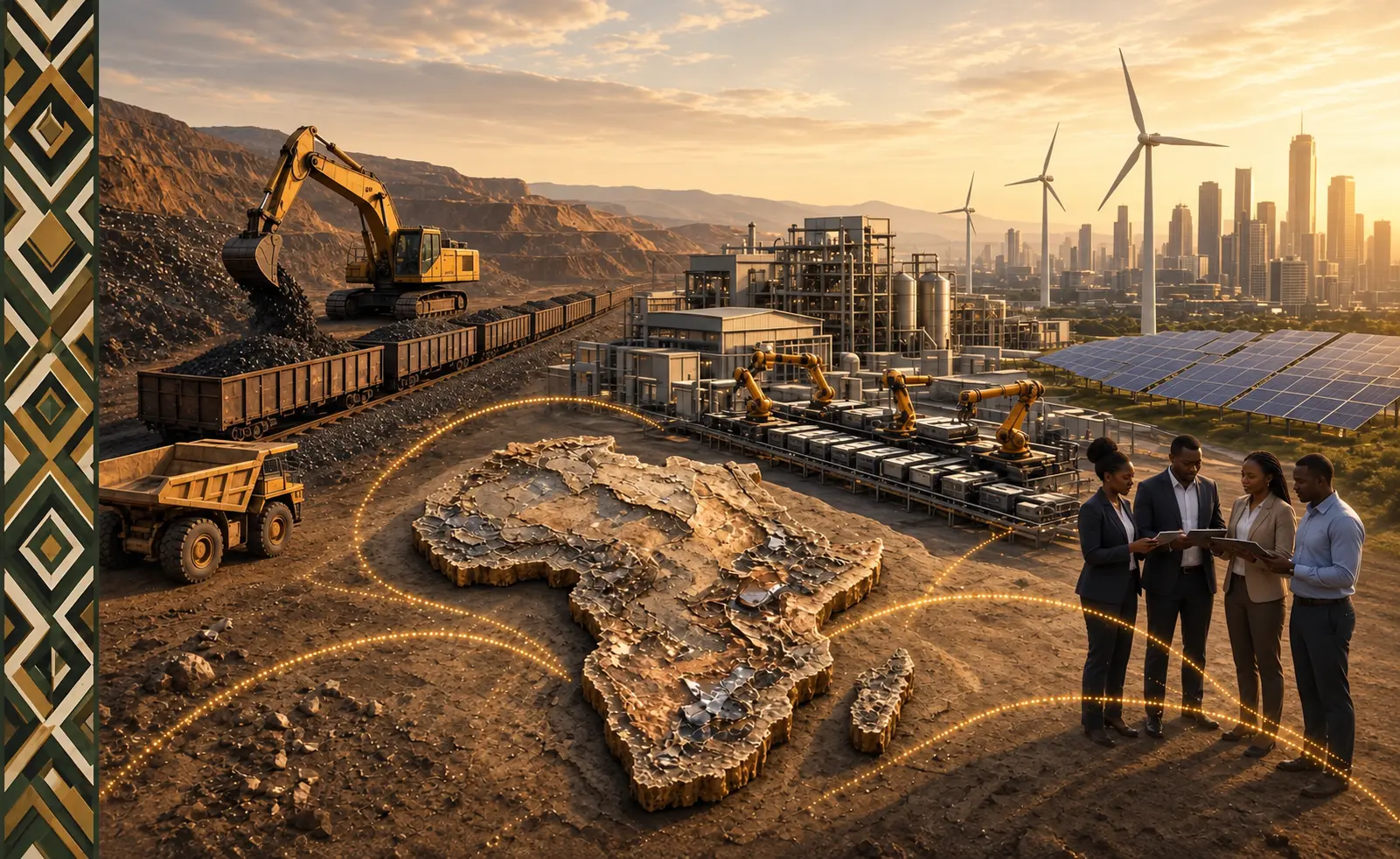
If you want to see where the next chapter of the Green Revolution is likely to be written, don't start with a battery plant in Germany or a Tesla showroom in the United States. Start with the red earth of Africa.
This is because the world's move toward cleaner energy and a lower-carbon economy depends not only on where clean technologies are designed and assembled, but also on where the resources, energy, and industrial capacity that make those technologies possible are concentrated.
The African continent possesses many of the world's most important reserves of cobalt, manganese, graphite, platinum-group metals, copper, lithium, and rare earth elements, while also offering some of the highest solar irradiation, wind corridors, hydropower potential, and world-class geothermal resources.
Countries such as the Democratic Republic of the Congo, Zambia, Zimbabwe, Namibia, South Africa, Mozambique, Tanzania, Kenya, Morocco, Egypt, Botswana, and Madagascar are emerging as strategic anchors of this transformation.
Their opportunity goes far beyond exporting raw materials. It extends to building integrated value chains in mineral processing, battery production, renewable energy, green hydrogen, and clean manufacturing—all of which help position the continent as a key architect of the Green Revolution, not just a supplier.
But much of this positioning depends on whether Africa’s resources are developed through strong governance, local value addition, and sustainable investment.
And therein lies the conundrum: the continent's greatest strategic assets are also the focus of intense geopolitical competition, weak governance, and, in some regions, protracted conflict.
Take, for example, the Democratic Republic of the Congo, a country that holds the keys to the world’s climate goals, yet it remains the site of one of the planet’s most complex and ignored conflicts.
While the country's southern mining belt benefits from the refurbished Lobito Corridor, which enables cobalt and copper from the mining hub of Kolwezi to be transported directly to the Atlantic port of Lobito in Angola, offering investors, the United States and Europe in particular, a more diversified and transparent supply route for critical minerals, the country's east remains mired in warfare.
The decades of conflict has been driven by a complex mix of armed groups, weak state authority, ethnic tensions, competition over mineral-rich territory, and the involvement of neighboring countries, including Rwanda, Uganda, and Burundi, with Angola playing a key mediating role. The violence has displaced millions, fueled a humanitarian crisis, and undermined the country's ability to fully capitalize on its vast natural wealth.
What makes this vexing situation even worse is the extent to which external powers have turned the DRC into an arena for geopolitical rivalry and competition over critical minerals.
Examples abound, but none resonates more profoundly—or cuts deeper into thepolitical consciousness of many Africansand observers around the world—thanthe role of the United States, whose status as a global superpower and deeply rooted, complex ties with Africa make itsrenewed engagement both consequential and contested.
Let me explain.
In June 2025, the United States brokered a peace agreement between the DRC and Rwanda. The accord committed both governments to end hostilities, address cross-border security threats, respect each other's territorial integrity, and establish a regional economic framework designed to unlock investment in the Great Lakes region's critical minerals.
What stands out about this mediation effort is that the United States was not formally invited by an international body to become involved. It instead chose to deepen its engagement while African-led peace efforts were already underway—a striking development given the U.S. administration's disparaging characterization of some African nations as "shithole countries" and its subsequent imposition of travel restrictions on several countries across the continent because of their African identity.
But unlike others before it, the U.S. administration had the temerity to say the quiet part of its calculation out loud. The administration openly linked its mediation efforts to U.S. strategic and economic interests, arguing that a more stable eastern Congo is essential for developing critical mineral supply chains and reducing dependence on China.
The administration told the world it was acting not out of humanitarianism, but economic self-interest—channeling the same calculations that drove the country’s Cold War-era policies in places like, you guessed it, Angola and the Congo, which led to a civil war that lasted 27 years in Angola and, in the DRC, conflicts too numerous to count and the 32 year autocratic rule of Mobutu Sese Seko.
It is difficult, for any objective observer, not to come to the sad conclusion that this present-day convergence of diplomacy and resource strategy risks, as it did before, subordinating the interests of Congolese communities to great-power competition, reducing the country's people to instruments in a broader geopolitical contest rather than treating them as the primary beneficiaries of the policies that shape their future.
But it does not end there.
The U.S. is busy making friends and mending fences all over Africa. From Zambia, Angola, Namibia and Zimbabwe to Tanzania, South Africa, Madagascar, and Guinea, Washington is pursuing a strategy of deepening diplomatic ties, expanding security cooperation, and backing infrastructure and investment initiatives aimed at securing long-term access to the critical minerals that underpin everything from electric vehicles and renewable energy technologies to semiconductors and advanced defense systems.
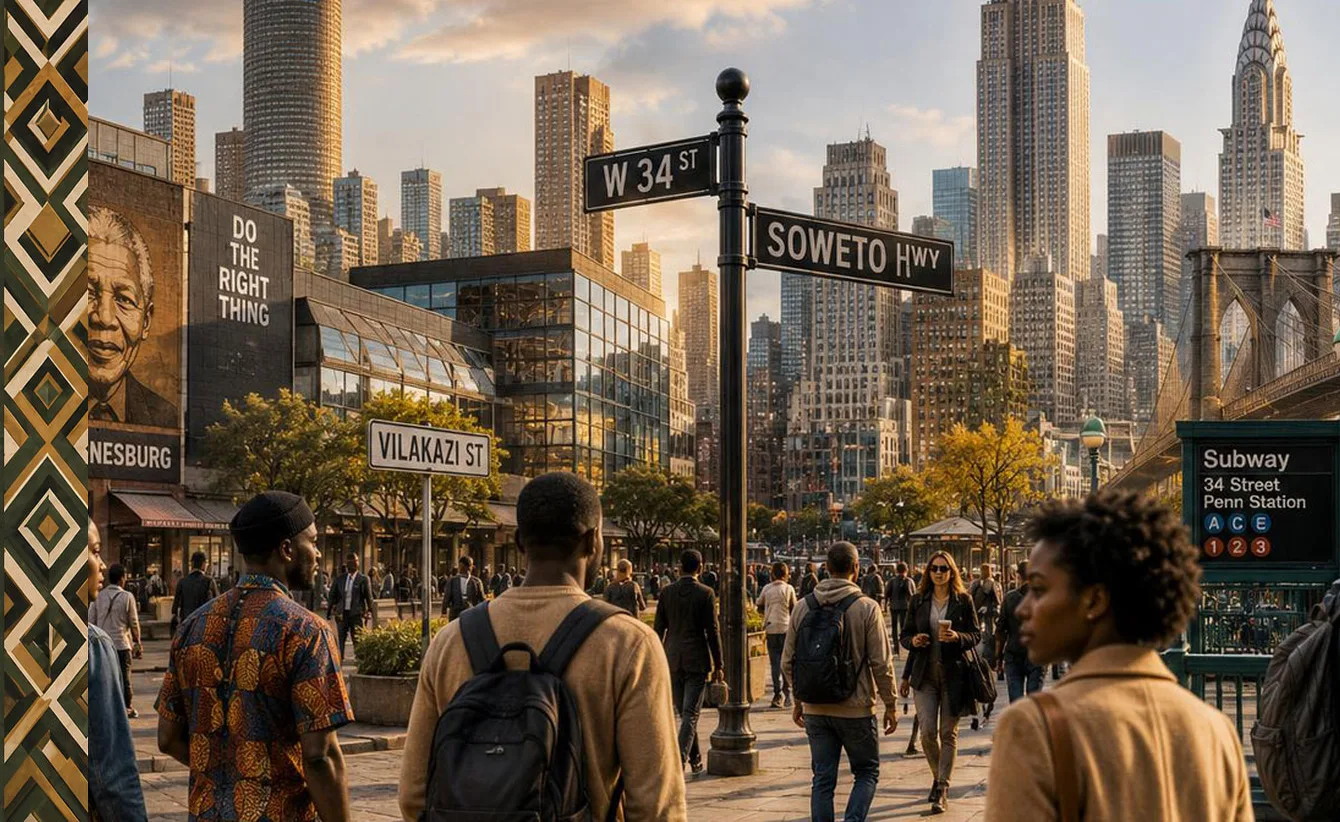
America and the world's push toward a green economic revolution therefore hinges on the African-American puzzle. The phrase is deliberately provocative—not as a reference to race or race relations, but to a new geopolitical reality in which Africa's critical minerals and America's economic and strategic ambitions have become inextricably linked.
Resource diplomacy has remained a central pillar of U.S. engagement across the African continent. Today, Washington no longer feels compelled to obscure this reality; it acknowledges openly that access to critical minerals is a strategic imperative.
The real question, then, is whether African countries will recognize the leverage they possess—not merely to remain suppliers of the critical minerals powering the global green transition, but to become architects of the industrial transformation those minerals make possible, much as several Middle Eastern states leveraged their oil and gas wealth to reshape their economies and redefine their place in the global order.
This is Africa's defining strategic moment. The opportunity is historic, but so too is the risk of inaction—or of mistaking renewed U.S. interest in Africa's critical minerals for an end in itself rather than the leverage Africa needs to negotiate a new industrial bargain.
Share with your friends

Join The Community
Get the latest analysis, exclusive content, and event updates delivered to your inbox

Connect
Independent analysis and dialogue at the intersection of Africa and the United States.